
Foil Highlights: What They Are and How a Stylist Places Them
Most people picture chunky stripes when they hear the word foils. That look came from thick sections and a skipped toner, not from the foil itself.
At Zayda Hair & Apothecary in Olmos Park, we place every foil by hand. First we talk through where you want light and where you want to keep depth. Foils are one of two ways we lighten hair, and we will tell you plainly when the other one suits you better.
What are foil highlights?
Foil highlights are strands of hair that a stylist separates, coats in lightener, and folds into foil while they process. The foil keeps the lightener on those strands and off the hair around them. It also holds in warmth so the lift stays even. A toner afterward sets the final shade. The result is dimension you control.
Lightener does not add color. It dissolves the natural pigment inside each strand. Hair climbs through warm stages on the way up: red, then orange, then yellow, then pale yellow. Where we stop depends on the shade you want and on how healthy the strand is. The toner then pushes the leftover warmth cooler, softer, or warmer. Skip that step and highlights can look brassy within days.
Why foil instead of painting in the open air? Control. Foil walls off each section, so lightener cannot creep onto the strands beside it. Your stylist can also open one packet at a time to check progress. That is how we get crisp brightness starting close to the root.
Open-air work is softer by design. Foils are sharper. Neither is right for everyone. On our menu, highlights come as balayage or foils, and we sort out which one you need in the consultation.
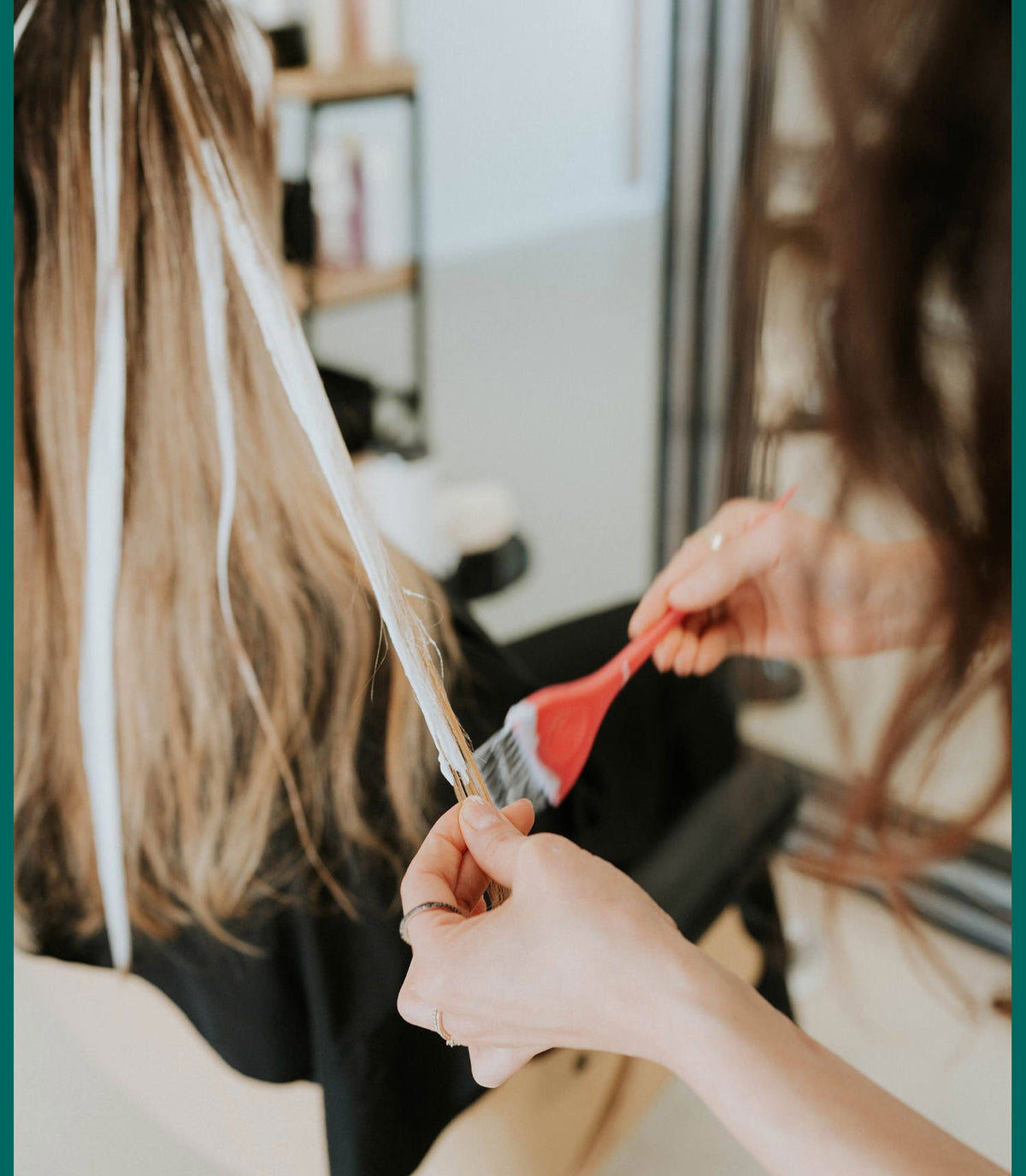
How does a stylist place foil highlights, step by step?
Foil placement follows a set order, and that order is what keeps the result even. Each step below ends with what done right looks like.
- Map the plan. We talk through where you want brightness and how light you want to go. We also go over your color history, including box dye and old highlights. Done right: you leave the consultation knowing where the light will sit and what upkeep it asks of you.
- Section the hair. We clip the hair into zones, such as the crown, the sides, and the nape. Every foil then lands where the plan says. Done right: the parting lines are clean and no zone gets rushed.
- Pick the strands. Using a tail comb, your stylist either weaves (picking alternating strands) or slices (taking a clean, flat section). Thinner picks blend more softly. Done right: the picks are fine enough that lightened pieces melt into the hair around them.
- Apply lightener and fold. We lay a foil under the section and brush lightener from just off the scalp down to the ends. Then we fold the foil so the edges seal. The scalp runs warm, so the root lifts faster than the ends. Starting a little away from the scalp accounts for that. Done right: the foils lie flat and nothing leaks.
- Work through the head in a pattern. We usually go from the bottom up, so finished foils stay out of the way. Face-framing pieces often come last, placed with the whole pattern in view. Done right: the foils form an even, repeating rhythm with no accidental gaps.
- Check the lift. Your stylist opens a foil and looks at the color. We judge by what the hair is doing, never by the clock alone. Sections that are ready get rinsed first. Done right: every strand reached the stage you agreed on, and none sat longer than it needed to.
- Rinse, tone, and finish. We rinse the lightener, tone the lightened strands, and style the hair. A gloss is on our menu if you want extra shine. Done right: the shade reads cool, neutral, or warm exactly as discussed, and the hair feels soft.
Weave, slice, or face frame: which foil pattern fits your hair?
The pattern decides whether highlights read as natural or as stripes. Same foil, different judgment. These are the four patterns we talk through most.
Fine weaves
A fine weave picks thin, alternating strands across a section. It gives the softest blend and the kindest grow-out. It suits guests who want brightness that does not announce itself. It takes more foils and more time, because each one holds less hair.
Slices
A slice lifts a flat, thicker section. The result is bolder, with a clearer line between light and dark. It suits guests who want visible contrast. The tradeoff is that thick slices on a low-contrast head can look stripey, so we keep them for places where contrast reads as intentional.
Face-framing foils
These are a few brighter pieces around the hairline. They catch light right where people look first. They are also a gentle way to try highlights without lightening the whole head. Because they sit near your face, they get toned with extra care.
Lowlights
Lowlights are the reverse. We foil in strands darker than your base to bring back depth. They help when earlier highlights have gone flat or too light. Paired with fine highlights, they give a dimensional finish.
Foil highlights or balayage: option one and option two
Both lighten your hair, and the real difference is how they grow out. After a full consultation, our stylists lay out two paths and you pick the one that fits your life.
Option one: foil highlights. This is the more involved look. The brightness starts closer to the root, the lift is stronger, and the pattern is precise. It is the right call if you want a clearly blonde result or defined dimension. The tradeoff is the root. As your hair grows, the line between new growth and lightened hair shows sooner, so you refresh it more often.
Option two: hand-painted balayage. This is the easiest path to live with. The color is painted on by hand and fades softly into your natural root. The grow-out is gentle, and visits can sit further apart. Our guide to balayage or highlights walks through the choice in more depth, and our post on hand-painted balayage in San Antonio explains how that technique works.
In many consultations, option two is the simpler route. Not always. A guest who wants the brightest blonde we can safely reach is usually better served by foils.
Who are foil highlights right for, and who should pick something else?
Foil highlights suit guests who want visible brightness and are comfortable with regular upkeep. They work on light to medium brown hair, and on hair that has never been lightened. They also suit hair that needs the control foils give. Placed as fine weaves, they give the effortless and natural looking beauty most of our guests come in asking for.
Foils are also a strong tool for blending gray. Fine highlights set around the gray soften the line where it grows in, so you are not chasing a root. Gray blending is one of the services this salon is known for. You can read more in our post on gray blending and on our owner's stylist page.
Foils are the wrong first move in a few situations:
- You want zero regrowth line. Foils start near the root, so new growth shows. Balayage is the better fit.
- Your hair is dark and has box dye on it. Dye pigment does not lift like natural pigment, and it often needs staged work. Our post on fixing box dye explains what can be corrected and what has to grow out.
- Your hair is already stretched thin from past lightening. More lightener on weak strands can cause breakage. We may suggest a gloss, a trim, and a pause instead.
- You plan to go back to a dark shade soon. Going dark after blonde needs a fill step first, which we cover in why we fill your hair first.
If your hair is not ready, we say so. We would rather hold you back a visit than hand you color that breaks.
What is a foil highlight appointment like?
Plan for a longer visit than a cut. Highlights include a consultation, sectioning, lightening, processing, toning, and styling. Processing time depends on your starting shade and on how much hair we lighten. We give you a time estimate in the consultation so you can plan your day. If you have a hard stop, tell us up front and we plan the pattern to fit it.
The consultation does a lot of the work. A guest wrote this in a Google review about a haircut, and the line fits any service here: "She took her time and I still feel fabulous weeks later." That pace is how we want highlights to go too.
Bring what helps us see your hair's history:
- Two or three photos of the look you want, plus one of what you do not want.
- A plain account of your color history, including box dye and old salon color.
- Any hard stop, such as a pickup or a flight.
Come as you are. You do not need to prep your hair in any special way.
We also offer Olaplex and K18 as add-ons, and many guests add them. We talk through whether either makes sense for your hair that day, and we never promise what they will do. Which stylist you book matters too, since pricing follows our level system. Our guide to how our level system works helps you choose, and current pricing sits on our service menu. All six of our stylists train in house, and we hold trainings every week.
What do people get wrong about highlights?
Most highlight disappointments trace back to the same few misunderstandings. Each one costs a second appointment, a toner you did not plan for, or hair that feels worse than it should.
- Asking for as light as possible in one sitting. Lightening has limits, and pushing past them risks breakage. When the goal sits far from your starting shade, we split it into stages. A staged plan means lifting part of the way, then toning so you leave with a finished color. The hair rests between sessions, and we set that gap by how the strands feel at the next consultation, not by a date picked in advance.
- Skipping the toner. Lightened hair is warm by nature. Without toning, it can look yellow or orange against the shade you pictured.
- Choosing from a photo alone. A photo shows a result, not a starting point. The same picture can be one visit on one head and a multi-visit plan on another.
- Expecting no regrowth line. Foils start near the root. If you want the lowest upkeep, option two exists for exactly that reason.
The honest fix for all four is the consultation. A few minutes of questions up front saves hours of repair later.
How long do foil highlights last, and how do you care for them?
Foil highlights never wash out, so what changes over time is the root, not the highlight. Hair grows about half an inch a month, which is why the regrowth line shows sooner than many guests expect. How often you come back for a root refresh depends on your contrast and on how soft we kept the root. We do not promise a number of weeks, because it varies by head. You can see how foils look as they grow out on our Instagram.
A few habits protect the result:
- Wash with care. Ask us which shampoo and conditioner fit your hair. Our retail shelf carries color-safe shampoos and conditioners, and your stylist can point you to the right one. Hair Story is in-salon pickup only.
- Use heat protection. Lightened strands are more porous, so they take heat styling harder.
- Book a gloss between visits. A gloss refreshes tone and shine without more lightening.
- Trim on schedule. Split ends dull highlights faster than anything else.
If color has gone brassy or patchy, the fix is usually a tone adjustment, not more lightener.
Frequently Asked Questions
What is the difference between foil highlights and balayage?
Foil highlights wrap sectioned strands in foil for a crisp lift that starts near the root. Balayage is painted by hand without foil, so it blends softly into your natural color. Foils give more control and brightness. Balayage gives an easier grow-out.
Do foil highlights damage hair?
Lightening is a chemical process, so it changes the hair, and no stylist can promise zero effect. How much depends on your starting condition and on how far we lift. We check strands as they process, adjust the plan to your hair, and may recommend a pause when it needs one.
How long do foil highlights take?
Longer than a cut, because the visit includes lightening, processing, toning, and styling. The time depends on your starting shade and how much hair we lighten. We give you an estimate in the consultation so you can plan around it.
Can I get foil highlights if I have gray hair?
Yes. Fine highlights set around gray soften the line where it grows in, so you are not chasing a root every few weeks. Gray blending is one of our signature services, and we can talk through blending versus full coverage in your consultation.
How do I know whether I need highlights or lowlights?
Highlights make strands lighter, and lowlights add strands darker than your base. If your color looks flat or too light overall, lowlights bring back depth. Many guests get both, so the result reads dimensional.
Can I get highlights over box dye?
Sometimes, but box dye often needs staged work before highlights can look the way you want. Tell us what you used and when. We assess the hair in person and build a plan around what it can handle.
Where can I get highlights in Olmos Park?
We are at 5327 McCullough Ave, near The Quarry Market. Guests also come to us from Monte Vista and Alamo Heights. Every service starts with a consultation, which you can do in person or by phone.
Ready to talk highlights?
Want foils, balayage, or someone to tell you which one fits your hair? Come see us at Zayda Hair & Apothecary in Olmos Park, where artistry comes first. Request your appointment, tell us what you have in mind, and we will lay out your two options. We are here for you.