
What Is a Razor Haircut, and Who Is It For in San Antonio?
A razor haircut is cut with a razor instead of shears. The blade slices each strand at an angle, so the ends taper to a soft point instead of stopping in a flat line.
That one difference changes how a cut moves and how it grows out. At Zayda Hair & Apothecary in Olmos Park, razor cutting is one of the ways we shape hair, next to scissors and clippers. Here is who it suits, and who should think twice.
What is a razor cut, and why would you want one?
A razor haircut is a cut made with a cutting razor instead of shears, usually on damp hair. The blade slices the hair at an angle, so the ends taper to a soft point. That takes out weight and adds movement in one pass. It suits fine to medium hair, thick hair that feels heavy, and anyone who wants a soft, lived-in shape.
Before we pick up a blade, we run the ends through our fingers. We are reading three things: how dry the ends are, how the hair falls when it is damp, and how much weight sits in the middle. That takes about a minute. It settles most of the question.
Picture a pencil. Shears cut straight across the tip and leave a flat edge. A razor shaves the wood down to a point. Hair behaves the same way. A flat edge sits heavy and stacks on itself, while a tapered edge lifts, separates and moves.
A razor needs a sharp edge and damp hair. A dull blade drags and tugs instead of slicing, and dry hair gives the blade nothing to glide over. So the hair stays wet, or we keep a spray bottle close through the whole cut.
The result is a cut that looks like it was never fussed over. That is the look we talk about most here: effortless and natural looking beauty. Soft edges, easy movement, and a shape that still works when you air dry it.
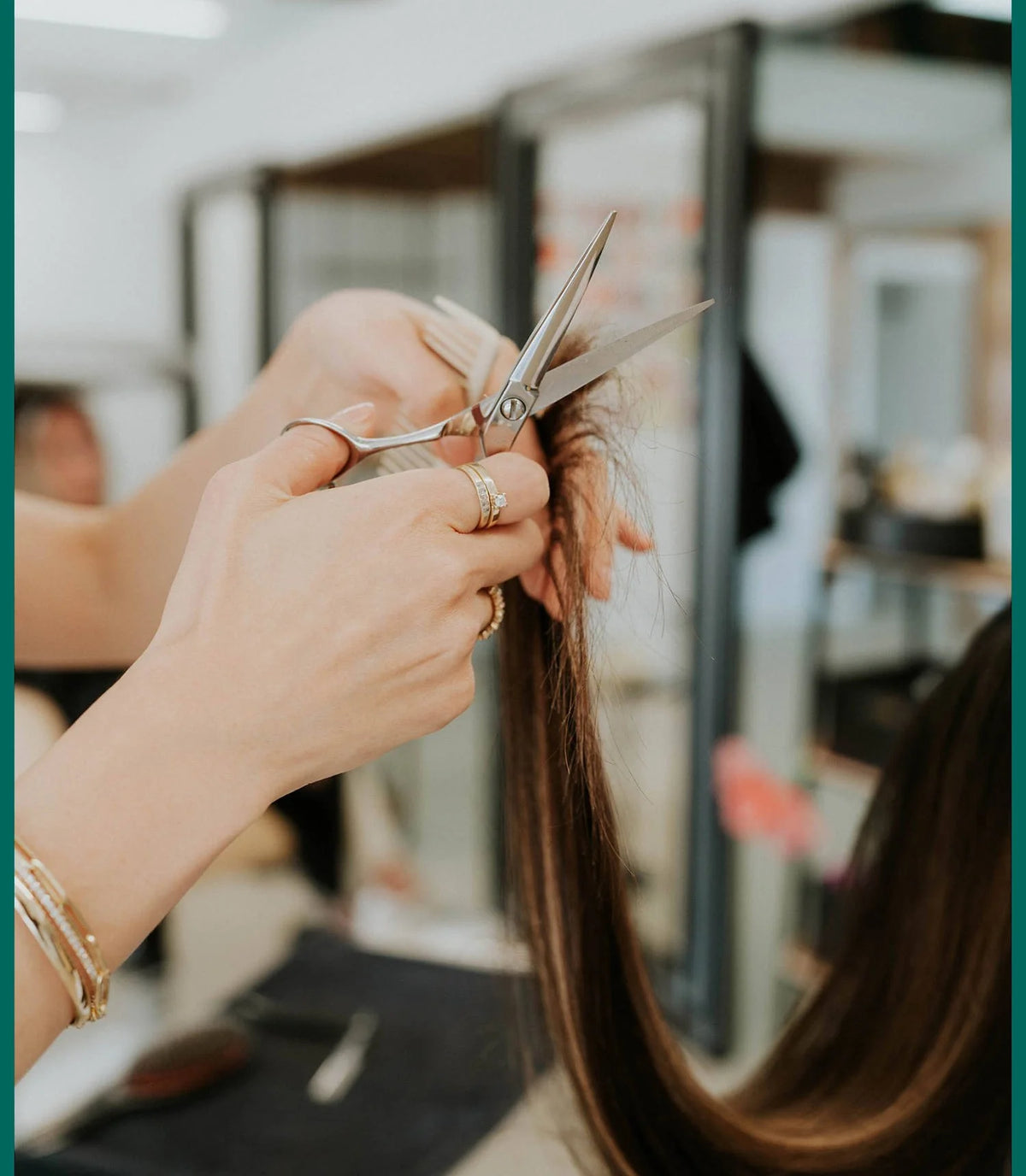
How is a razor cut different from a scissor cut?
The difference is the edge. Scissors leave a clean, flat line. A razor leaves a tapered, textured one. Neither is better in general. Each one does a different job, and a good cut often uses both.
Razor cutting
A razor removes weight and softens lines at the same time. It is the tool for wispy ends, shaggy layers, feathered bangs and textured tops. Because the ends are tapered, a razor cut tends to grow out softly. No hard line shows up one morning looking overgrown.
The tradeoff is that tapered ends look lighter. On fine hair, too much razor at the bottom can make the perimeter look see-through. On dry or coarse hair, it can leave the ends looking fuzzy. We read your hair before the blade comes out.
Scissor cutting
Shears give you precision and weight. They are the tool for a blunt bob, a sharp one-length line, or a hem that should look thick and heavy. Scissors also give a stylist more control on hair that is curly or dry.
The tradeoff is that a flat edge holds its weight. On thick hair, that can mean a shape that feels bulky until the bulk comes out some other way.
Both in one cut
Most guests do not need to pick one. After a full consultation, we usually lay it out as two paths.
Option one: razor throughout. Soft perimeter, lots of movement, a shape built for texture. This is the more involved look, and it asks the most of your styling habits.
Option two: scissors on the outer edge for weight, razor on the inside for movement. This is the simpler road. It keeps a fuller line at the ends and still takes the bulk out where it matters.
We talk through both before the first snip. Then you pick.
Who is a razor haircut for?
A razor haircut suits guests who want movement, softness and a shape that looks relaxed. It works across fine, medium and thick hair, for a different reason in each case.
San Antonio heat belongs in this conversation too. Hair carrying a lot of weight sits flat and damp by midday here, and taking that weight out of the middle is often the whole fix.
Fine and medium hair that wants movement
Flat, one-length fine hair can hang like a curtain. A razor works through the inside layers and adds lift without taking length. We often keep the outer edge a little fuller with shears so the ends do not look thin.
Thick hair that feels heavy
Thick hair usually needs weight removed, not length. A razor takes out bulk by tapering the hair instead of chopping it blunt. Guests with thick hair often tell us it feels lighter and dries faster afterward. That comes from weight leaving the middle of the hair, not the ends.
Bangs and face-framing pieces
A razor is the tool for bangs that look soft instead of stiff. Wispy fringe and curtain pieces blend into the rest because the edges are tapered. Blunt bangs are a scissor job.
Men's textured cuts and tapers
A razor is a natural fit for men's cuts that need a soft transition. Think a textured top, a tapered neckline and clean edges around the ears.
Here is the version we see most. A guest comes in with a grown-out clipper cut. The sides are fine. The top has gone flat and lost its shape. We clean up the taper with clippers, then slice the top with the razor so it falls forward instead of sitting like a helmet. Weeks later it is still soft on the ends. There is no shelf of blunt hair to work around.
Men's grooming is one of the specialties at Zayda, and the menu carries beard trim and ear waxing as add-ons. You can see our cutting work on our Instagram if you want a look at the finished shape before you book.
Razor work and gray blending pair up more often than guests expect. In our chairs, gray hair tends to be coarser than the hair around it, and it stands up where the rest lies down. A blunt line makes that contrast sharper. Tapered ends let the gray fall in with everything around it, so it reads as texture instead of a stripe. We often plan the cut and the color in the same conversation. Our gray blending guide covers the color side.
Who should skip a razor haircut?
Some hair does better with shears, and we would rather say so at the consultation. These are the cases where we slow down and talk it through.
- Dry or damaged ends. A razor tapers the ends, and tapered ends on dry hair can look frayed. Scissors leave a cleaner edge until the hair is healthier.
- Fine hair that you want to look thick at the bottom. A blunt scissor hem makes fine hair look fuller. A razor at the perimeter does the opposite.
- A sharp, geometric line. A one-length bob or a precise blunt cut needs a flat edge. Razors do not make flat edges.
- Coarse or frizz-prone hair. The razor can roughen the cuticle and leave a halo of frizz. It depends on the hair, which is why we look and feel before we decide.
Curly and coily hair deserves its own note. A razor can work on curls in the right hands, but it is the exception. Many curly cuts do better with shears, because a razor can break up a curl pattern. Amber, whose focus here is cuts for every texture, including curly cuts, can walk you through what your curls will take.
A no from us is not a verdict on your hair. It is a plan to get you there another way.
What happens at a razor haircut appointment?
Every service at Zayda starts with a consultation, and a razor cut is no different. That conversation shapes the look. Tell us at booking if you have a hard stop, and we plan the visit around it.
Here is the order of the appointment.
- Talk it through. You tell us what you want, bring photos if you have them, and we look at your hair as it sits. By the end of this step you know which cut you are getting.
- Start with clean, damp hair. We shampoo or dampen the hair so the razor glides. The hair stays damp for the whole cut, never dry.
- Section the hair. We divide it into clean parts so every layer is cut on purpose. Nothing gets skipped, nothing gets cut twice.
- Set the shape. We cut the outer edge first, often with scissors, so the length and line are right. The silhouette should look balanced before any texture goes in.
- Add the razor work. We slice through the inside and the ends to remove weight and soften edges. Done well, the hair moves without looking thin.
- Dry it and check it. We dry and style the hair, look at it in motion, and make small changes. Now you see how it falls on a normal day, not just a blowout.
Booking a dry cut? Come with clean, dry hair, no product and no tight bun. A dry cut works from how your hair sits on its own, and a bun leaves marks that hide the real shape.
For what a visit costs at each stylist level, see our service menu. Prices live there, where they stay current.
What do people get wrong about razor haircuts?
Most razor mistakes start with one idea: that a razor is a quick way to make hair thicker or thinner. It is a tool. The result depends on the hand and the hair.
- Assuming razor means damage. A sharp blade on damp hair cuts cleanly. Damage comes from a dull razor, dry hair or too much pressure. The tool is not the problem.
- Asking texture to do too much. Too much razor on fine hair leaves it stringy. We tell guests hair grows roughly half an inch a month, so a cut that took out too much needs months to fill back in. Texture also hides nothing on a shape that is off. The line has to be right first.
- Skipping the consultation. A photo helps. It does not show your hair type, your part, or how you style at home. We need all three.
- Treating it as a different haircut. Razor cutting is a technique, not a style. You can get a bob, a shag or a short crop with a razor. Name the shape you want, then ask about the tool.
How do you style and keep a razor haircut?
A razor cut is built to look good with little effort, and it tells you when it is due. Short cuts and bangs tend to need attention closer to the low end of six to ten weeks. Longer layers can stretch toward the high end.
Here is what we tell guests to do between visits.
- Let it air dry some days. A good razor cut falls into shape on its own. If yours does not, tell us at your next visit.
- Use a little texture product, not a lot. Tapered ends respond to a small amount of cream or spray, and heavy product weighs them down. Our shelf carries Davines and Evo, and your stylist can point you to the right one.
- Skip aggressive brushing when it is dry. Tapered ends are delicate. A wide-tooth comb on damp hair is gentler.
- Trim on a schedule, not when it looks bad. Tapered ends lose their shape faster than blunt ones once they grow past a point.
One guest wrote in a Google review about a layered cut: "She took her time and I still feel fabulous weeks later." That is the bar. A cut should still look right once the first week is over.
Growing your hair out? A razor cut is kind to that plan. The tapered ends blend into new growth, so there is no hard line to wait out. Your stylist can map the growth with you and trim only what needs it.
Frequently Asked Questions
What is a razor haircut?
A razor haircut is a cut done with a cutting razor instead of shears, usually on damp hair. The razor slices at an angle, so the ends taper to a soft point. The result is movement, texture and less weight than a blunt scissor cut.
Does a razor haircut damage your hair?
No, not when it is done with a sharp blade on damp hair. Damage comes from a dull razor, dry hair or too much pressure. Hair that is already dry or coarse can look frayed after a razor, so we check the condition first.
Is a razor haircut good for thick hair?
Yes. It is one of the tools we reach for most on thick hair, because it removes weight by tapering instead of chopping blunt. We usually keep the outer edge fuller with scissors so the ends do not look thin.
Is a razor haircut good for fine hair?
Yes, with care. On fine hair we tend to use the razor inside the layers for lift and keep a fuller scissor edge at the ends. Too much razor at the perimeter can make fine hair look see-through.
Can you get a razor haircut on curly hair?
Yes, but it is the exception. A razor can break up a curl pattern and leave frizz, so many curly cuts do better with shears. Amber focuses on cuts for every texture, including curly cuts, and can tell you what your curls will take.
How often should you get a razor haircut?
In our experience, most guests do well every six to ten weeks. Short cuts and bangs tend to land closer to the low end. Longer layers stretch toward the high end.
What should you bring to your first razor haircut appointment?
Bring photos of the look you want, and photos of what you do not want. Come with clean hair if you are booking a dry cut. Every service starts with a consultation, so we talk it all through before we cut.
Come see us
A razor haircut is a good answer for the right hair and the wrong answer for hair that wants a blunt line. We will tell you which one you have. Start on our haircuts page to see what the cut includes.
You can also meet our owner and executive stylist and the rest of the team before you choose who to sit with. When you are ready, book an appointment at Zayda Hair & Apothecary in Olmos Park, near The Quarry Market. Follow along on Instagram if you want to see the work first. Come as you are. We are here for you.