
How to Transition to Gray Hair Without a Harsh Line
You transition to gray hair without a harsh line by lowering the contrast between your dyed color and your natural silver, not by waiting for the line to grow out. A colorist softens the dark dye, paints fine lighter pieces near the root, and shapes the cut so the dyed length is trimmed away over time.
At Zayda Hair & Apothecary in Olmos Park, this is work our owner, Erika Valdez, knows well. Gray blending is one of her two specialties, and it shapes how we approach every transition. Our full guide to gray blending covers the service broadly. This post stays on one question: the line.
What softens the line between dyed hair and natural gray?
Contrast is what makes the line harsh, so the fix is to reduce it. We blend the two zones by adding hand-painted dimension near your roots, glossing the dyed length toward a softer tone, and cutting away the darkest ends over several visits. The goal is hair where your gray and your old color meet gradually, not at a clean edge.
The harsh line comes from the dye, not the gray. Permanent dark color sits at one even depth from root to end. Your new growth comes in silver. Hair grows roughly half an inch a month, so within a couple of months the eye catches a band.
Dark dye does not wash out, either. It only comes off with another chemical step, so the dyed length stays dark until we lighten it or cut it away. That is why waiting alone rarely works.
Four things do the softening:
- Hand-painted lighter pieces. Fine strands of lighter color near the root and around the face. They copy the way gray naturally mixes with your base shade, so new silver looks like it belongs.
- Gloss. A gloss shifts the tone of the dyed length so it sits closer to your natural color. It also adds shine.
- The haircut. Every trim removes some of the old color. A shape with movement also hides where the two meet.
- Time between visits. We space appointments so your gray has room to show, and we do not reset the clock with a fresh coat of dark.
If the dark color came from a box, the length is often uneven, with darker ends and lighter mid-lengths. Our post on fixing box dye explains what we can correct and what has to grow out.
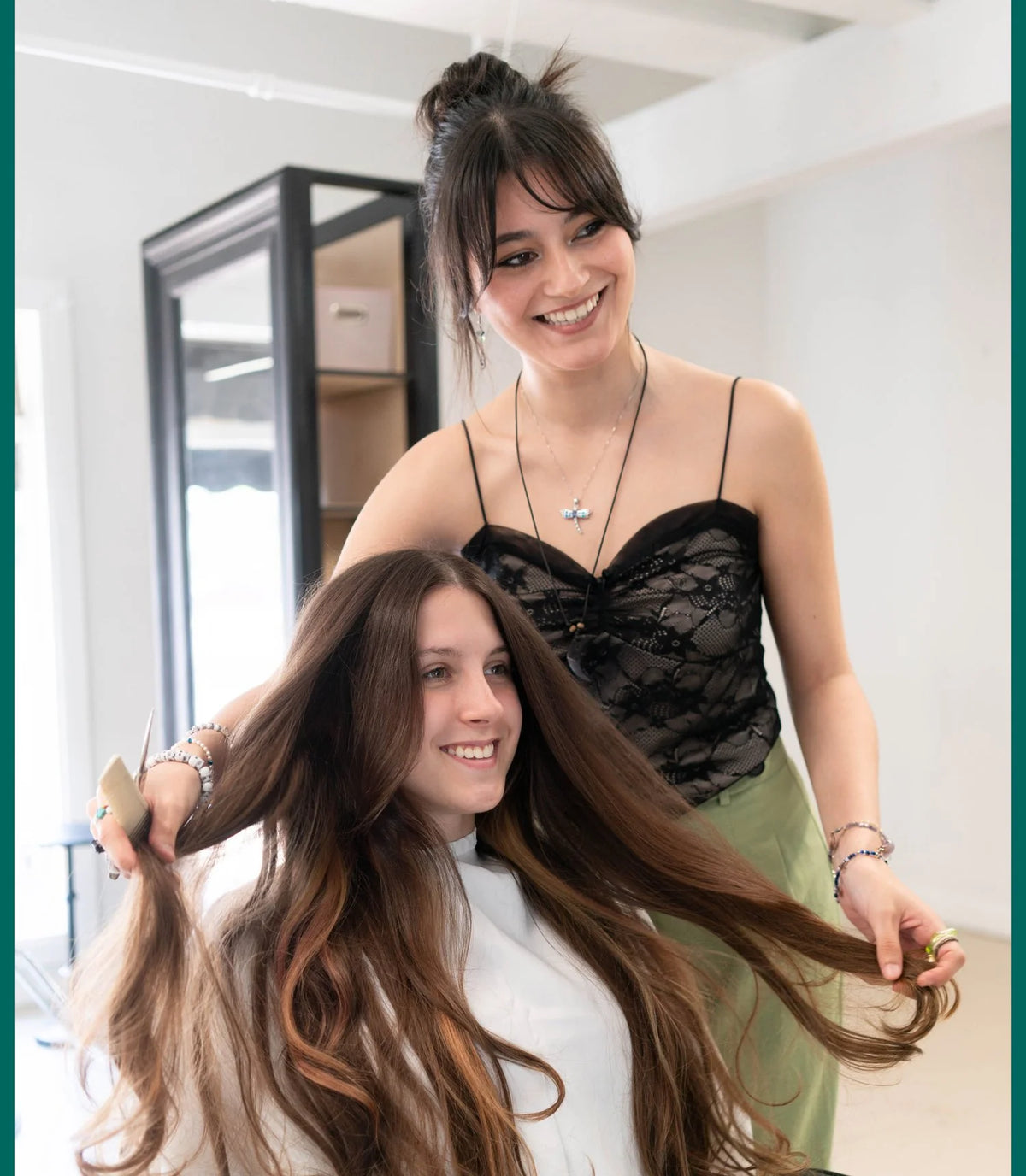
How to transition to gray hair: option one and option two
After a full consultation, we give you two paths. You pick the one that fits your life.
Option one: the full blend
We hand-paint dimension through the root area and around the face, lighten part of the old dark length, then gloss everything to one tone. Lightening dark dye is done in stages, for the same reasons we explain in our post on why we fix color in stages. Expect more than one visit.
The payoff is that no band ever shows. Your silver reads as part of the color, and you spend less time in the chair for touch-ups later.
Option two: the simple path
You stop covering the roots. We keep a gloss and a trim on a steady schedule, and the old color fades and gets cut away. It is the easiest route, with the fewest hours in the chair.
The tradeoff is honest: the line will be softer than before, but you will see it for a while. It also takes longer to clear.
Choose option one if the contrast bothers you every time you pass a mirror. Choose option two if you want low effort and can live with a visible middle stage. You can begin with option two and add option one later.
What does a transition appointment look like?
Every transition starts with a consultation, and it is a conversation that shapes the look. New color guests can have it in person or by phone. We look at your roots, how dark the length is, and how much gray you have, then talk through where you want to land.
The first color visit runs longer than a root retouch. Lightening and gloss each need processing time, and we do not rush either one. We never promise a one-visit transformation.
Leaving the chair, your hair looks softer and more dimensional, with some silver already showing. Two weeks later, the new growth comes in against those painted pieces. It reads as silver, not as a stripe.
The cut matters as much as the color. One guest wrote in a Google review about Erika's haircuts: "She always gets the memo on the haircut I need for the vibe change I am wanting." That is the kind of listening a transition needs. Our haircut page shows what we offer, and you can see how blended color grows out on our Instagram.
What do people get wrong when growing out gray?
Most frustrations come from four habits.
- Going darker at the first sight of the line. Each fresh coat of dark pushes the finish line further away.
- Cutting everything off to start fresh. A short cut suits some people. It is just not required, and you can get there gradually.
- Skipping the gloss and the trims. Gray with dull, dry ends looks neglected, even when the color plan is right.
- Judging the result in week three. The in-between stage is the hardest to love. Judge the finished look instead.
Gray strands also feel different from pigmented hair. In our experience they can run coarser and wiry. Ask us which products on our shelf suit your hair. If the ends feel dry, Olaplex and K18 are add-ons we offer.
Frequently Asked Questions
How long does it take to transition to gray hair?
It depends on your length and how dark your dye is, and we do not promise a timeline. In our experience, shorter hair clears faster, and a full blend usually takes several visits. We map out the steps at your consultation.
Can I transition if I have dyed my hair dark for years?
Yes. The dark dye stays in the length, so we lighten and gloss it in stages and trim it away over time. Your natural gray grows in at the root the whole while.
Do I have to cut my hair short?
No. We soften the line with color and shape first. Some guests choose a shorter cut to move faster, and that is their call.
Will my gray look yellow or wiry?
Gray can pick up warmth and often feels coarser. A gloss helps with tone, and a cut with shape helps it sit better. We also recommend home care that fits your hair.
How often will I come in while transitioning?
We set the interval with you at the consultation. It is usually longer than the root retouch schedule you were on, because we are no longer chasing the root.
Stop In and Say Hi
If you are ready to stop covering your roots, come see us at Zayda Hair & Apothecary in Olmos Park, near The Quarry Market. Request your appointment, tell us your goals, and we will lay out option one and option two for your hair.