
How Often Should Men Get a Haircut? What We Tell Guests
Most men need a haircut every 4 to 6 weeks, and sooner if they wear a tight fade or taper. That's the short answer to how often men should get a haircut, and the reason is simple: the edges lose their shape long before the top does. Men's cuts and grooming are a specialty of our owner, Erika Valdez, and our haircuts page covers how we approach every cut. This guide stays on one thing: timing.
How often should men get a haircut for their style?
Most men do well with a haircut every 4 to 6 weeks. A skin fade or tight taper needs a visit every 2 to 4 weeks, because the shape softens first. Longer cuts can stretch to 6 to 10 weeks. These are the intervals we see work at the chair, not rules.
Hair grows roughly half an inch a month. What that half inch does to you depends on how short you wear it.
Skin fades and tight tapers: every 2 to 4 weeks
When the sides are cut that close, half an inch changes the proportions of the whole head. The blend between short and shorter blurs, and the neckline fuzzes out. Guests who like a crisp, clean line tend to book at the short end of this range. Guests who don't mind a softer fade can use the long end.
Classic short back and sides, scissor or clipper: every 4 to 6 weeks
This is the most common men's cut we do. The sides still read as tidy at four weeks. By six, hair starts to cover the tops of the ears and the collar line gets heavy. Past that point you're no longer growing out a haircut. You're growing out a different one.
Longer on top, medium length or textured: every 6 to 10 weeks
Length forgives timing. The top has room to move, so you can go longer between visits. The sides and neckline still need attention, though, and weight tends to shift forward as the cut grows. If you're growing your hair out on purpose, tell us. We'll plan shaping visits so you don't lose the length you're working for.
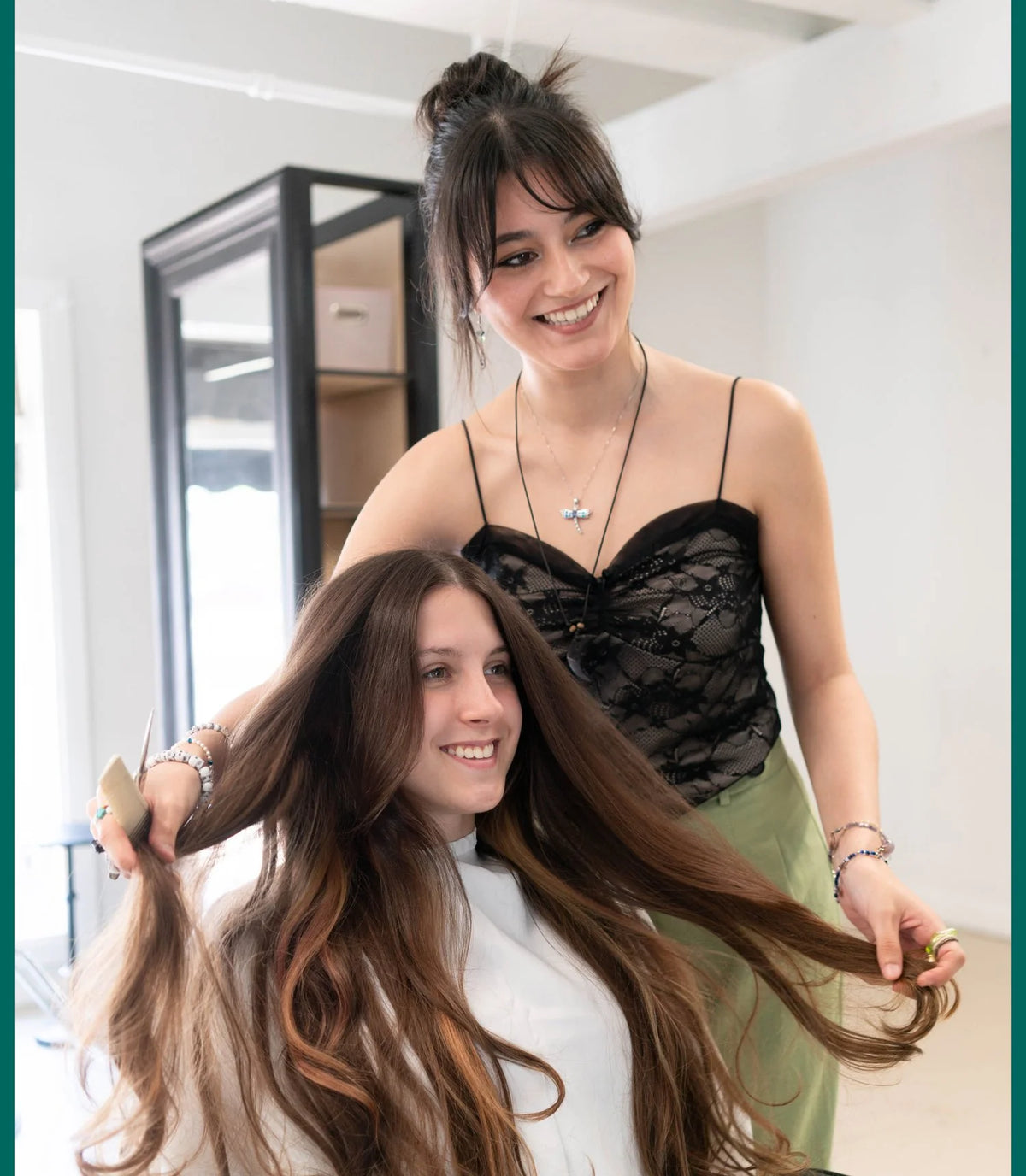
Why the edges tell you when it's time
The edges tell you when it's time: neckline, around the ears, and the part. Those areas are cut shortest, so any growth shows there first. The top rarely looks bad before the edges do.
A razor haircut can change this a little. In our experience, a razor-cut shape tends to grow out softer than a blunt clipper line, which can buy some guests extra time.
Here's a quick mirror check you can run at home:
- Dry your hair and style it the way you normally wear it.
- Look at the hair over your ears. If it covers the top of the ear, you're due.
- Check your neckline with a second mirror or a phone photo. A fuzzy line means the shape is gone.
- Leave the top unstyled for a moment. If it falls forward or splits somewhere new, the weight has moved.
Two out of four looking off? Book. Don't wait for all four.
Option one or option two: setting a schedule that lasts
A schedule that lasts comes down to two paths: a standing visit at the short end of your range, or a simpler rhythm at the long end. We lay out both after a full consultation, the way Erika does.
Option one is a standing visit at the short end of your range. You get the full shape every time, and you can add a beard trim or ear waxing to the same appointment so everything is done together. It's the most polished look and the most consistent.
Option two is the simplest version. Pick the long end of your range, and for existing guests we also offer a tweak, a quick trim between full cuts, which you'll find on our service menu. You keep the shape without sitting for a full appointment every time.
Neither one is wrong. It depends on how crisp you need to look and how much time you want to give it. Whether you live in Olmos Park or come in from Monte Vista or Alamo Heights, it's a short trip to us near The Quarry Market, so a regular rhythm is easy to hold.
One of our guests put it this way in a Google review of Fernando: "He took his time, paid attention to the details, and made sure everything was clean, balanced, and exactly how I wanted it." Clean and balanced is what a regular schedule protects. You can see the shapes we cut on our Instagram.
What men get wrong about haircut timing
Most timing mistakes come from waiting too long or guessing by the calendar. Here's what we see most.
- Waiting until it looks bad. By then the shape is gone, and we're rebuilding the cut instead of refining it. That takes more of the cut's length than a regular visit would.
- Going by the calendar, not the mirror. Hair doesn't grow evenly. Your neckline may be ragged at three weeks while your top still looks fine.
- Skipping the beard. A fresh cut next to an untrimmed beard looks unfinished. A beard trim at the same visit fixes that.
- Arriving with hair that isn't ready. For a dry cut, come in with clean, dry hair, worn down and not in a bun. We can see how it falls and cut it properly.
If gray is part of why you want to look sharper sooner, ask us about gray blending. Blending softens the contrast so gray looks intentional, not like something you missed.
Frequently Asked Questions
Is every two weeks too often for a fade?
No. A skin fade or tight taper holds its shape for about 2 to 4 weeks, so a visit every two weeks is normal if you want it sharp. Haircuts at that pace don't harm your hair.
Does cutting hair make it grow faster?
No. Hair grows from the root, and trimming the ends doesn't change that. Regular cuts only keep the shape even and stop the ends from looking ragged.
Can I go 8 weeks between haircuts?
Yes, if your cut is longer on the sides and top. A short back and sides or a fade will lose its shape by then. Tell us at the consultation how long you plan to wait and we'll cut with that in mind.
What is a tweak, and when should I use one?
A tweak is a quick trim for existing guests between full haircuts. It tidies the neckline and edges so your cut looks fresh without a full appointment. It's a good fit for option two above.
CTA
Come see us at Zayda Hair & Apothecary in Olmos Park, near The Quarry Market. Tell us how you wear your hair and how often you want to be in the chair, and we'll lay out your two options. Request your appointment and we'll set up your schedule.